Steel Cutting Optimization for Boat Builders: Reduce-waste
Many boat builders businesses treat steel waste as an unavoidable cost. The ones that thrive treat it as a solvable problem. Here's how to solve it.
Key Benefits
The Hidden Costs of Steel Waste in Boat builders
In boat builders, throwing away steel offcuts isn't just throwing away material—it's throwing away profit. When material prices fluctuate, maintaining tight control over your inventory and scrap rates is the only reliable way to protect your margins.
Many workshops accept a 20% waste rate as "the cost of doing business." However, modern digital tools have proven this number can be halved. If your shop processes significant volumes of steel, reducing waste by just 10% can equal thousands of dollars saved annually.
Manual Layouts vs. Algorithmic Optimizeion
Historically, boat builders professionals have relied on sketchpads or whiteboards to plan their cuts. While better than guessing at the saw, this has severe limitations. Humans naturally try to align edges and create tidy rows, which rarely results in the tightest mathematical fit.
Switching to an algorithmic planner means feeding the computer your dimensions, and it evaluates thousands of permutations in seconds—effortlessly handling the complex nesting required to squeeze every last millimeter out of your steel.
Managing Your Steel Offcuts
One of the biggest leaks in a boat builders workshop's budget is mismanagement of offcuts. A large scrap of steel leaned against the wall is effectively frozen cash.
The secret to maximizing material yield is an inventory system that forces you to use offcuts first. Before suggesting a new sheet or length, the software should attempt to fulfill the cut list using your existing reusable scrap.
Understanding Steel Stock Sizes and How They Affect Optimizeion
Steel is typically available in 6m, 9m, 12m bars and sections. The choice of stock size has a significant impact on how efficiently your parts can be nested. A stock size that aligns well with your most common part dimensions will yield far less waste.
Running an optimization analysis with multiple stock sizes side by side is the only reliable way to determine which is most efficient for your specific mix of boat builders jobs.
The Boat builders Production Workflow and Where Optimizeion Fits
The standard boat builders workflow is: measure, plan, cut, and install. Cut optimization has its highest impact at the planning stage—before any material is touched—but it also provides ongoing value by tracking offcuts that accumulate during production.
The biggest pain point in this workflow is balancing material costs against project requirements. Integrating a systematic cut plan into the early stages of the process directly resolves this bottleneck.
Why material yield percentage Is the Metric That Matters for Boat builders
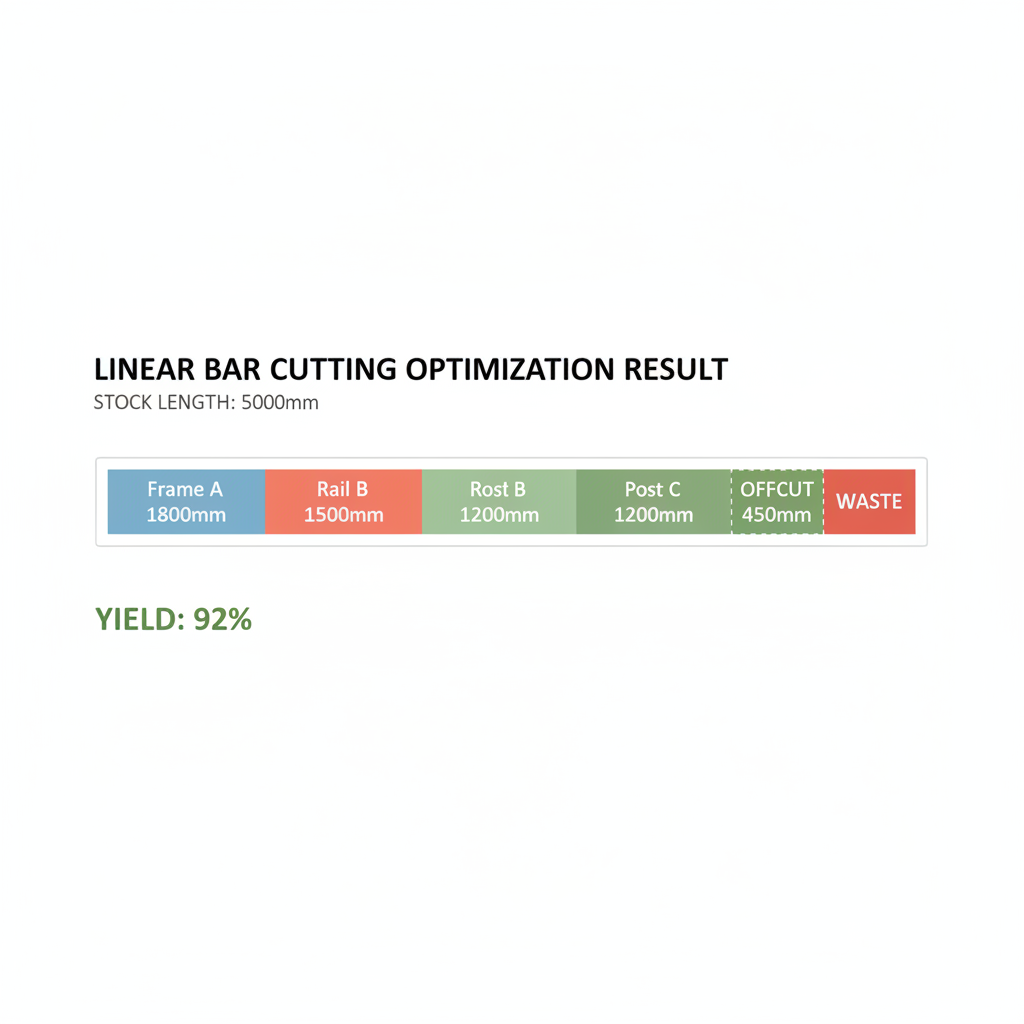
Different businesses measure efficiency in different ways, but for boat builders dealing with steel, material yield percentage is the most actionable number. It tells you directly how much material you are getting value from versus how much you are paying for and discarding.
Tracking this metric consistently over time makes it easy to see whether process changes are helping or hurting. If your yield drops after hiring new staff or switching suppliers, the data will surface it immediately.
Buying Steel Smarter with Better Cut Planning
One of the most underrated benefits of cut optimization software for boat builders is improved purchasing decisions. When you know exactly how many sheets, rolls, or lengths a job requires before you place the order, you stop over-buying as a buffer against uncertainty.
Over-ordering is one of the most common sources of steel waste in boat builders. It creates physical clutter, ties up working capital, and often results in material being discarded when it falls below the minimum usable size.
Common Applications
- Importing an existing cut list from Excel when switching from another optimizer to CutWize.
- Validating that a supplier's steel dimensions match the order before committing to the cut plan.
- Managing a mixed job queue where the same steel stock is shared across multiple customer orders.
- Training new staff in boat builders to produce correct cut plans without relying on experienced estimators.
Pro Tips for Steel
- Input your actual stock dimensions, not nominal ones. Steel described as standard lengths of 6m or 12m often has slight manufacturing tolerances.
- Label your pieces immediately after cutting. When dealing with similar sizes of steel, tracking becomes impossible without labels.
- Consider buying steel in the next standard size up when your required part is close to the stock edge—the cost difference is usually less than the labor cost of dealing with a bad cut.
- Track your material yield percentage over time. If it's getting worse, your cut planning process needs attention.
- Run an optimization pass at the start of every week for all pending jobs. Batching orders improves material yield significantly.
- Switching from another cutting optimizer? Paste your existing stock list and cut list from a spreadsheet to get set up in under a minute.
Quick Start Guide: Steel
Audit Your Current Offcut Stock
Before starting any new boat builders job involving steel, take stock of your existing offcuts. Enter them into your inventory so the optimizer can use them before you open new material.
Build Your Cut List
Collect all part dimensions from your boat builders drawings or specifications. Batch parts from multiple jobs if possible—more parts means better nesting.
Configure Material Settings
Set your steel stock size (standard lengths of 6m or 12m), blade kerf (typically 2–3mm for an angle grinder or 1.5mm for a cold saw), and any constraints such as precise tolerances required for structural integrity.
Generate and Review
Run the optimizer and review the pattern. Check yield percentage and identify any awkward offcuts that could be avoided with minor part size adjustments.
Place Your Timber or Sheet Order
Use the exact material quantities from the optimized plan to place your supplier order. No more adding a buffer—let the data decide.
Frequently Asked Questions
Is it worth tracking small steel offcuts for boat builders?
Does CutWize support overlays for T-1-11 siding or security screens?
Is optimization software expensive for boat builders?
How much steel waste is typical for boat builders?
Can I optimize steel cuts manually?
How does CutWize handle boat builders workflows specifically?
What's the ROI of using cut optimization software in boat builders?
Start Saving Material Today
Ready to stop wasting steel and streamline your boat builders workflow? Generate your first optimized layout today—free to start, no credit card required.
Try CutWize Free